
Frederick, Maryland · Residential Renovation
Do I Need an Interior Designer for My Frederick, MD Home Renovation?
The honest answer is no, not always. Which is a strange thing for an interior design studio in Frederick to publish, so it is worth explaining exactly where the line falls.
We get this question most often from people about to spend a serious amount of money on a house they like, in a market where good contractors are booked months out. They have a Pinterest board, three contractor quotes that are hard to compare, and a growing suspicion that they are about to make several decisions they cannot undo. What they want to know is whether a designer is a genuine part of the solution or an extra layer between them and the work.
Sometimes it is the second one. A renovation with a small number of independent decisions does not need a design team, and a good contractor with a decisive homeowner will do a fine job of it. What follows is how to tell which project you have.
The Short Answer
You need an interior designer when your decisions depend on each other. If you are replacing something with a better version of itself in the same place, you probably do not. If you are changing how rooms are used, how they connect, or how they are lit, you almost certainly do.
It is not about the size of the budget. It is about how many things have to be right at the same time.
When You Probably Don't Need a Designer
These are the projects where hiring a design studio adds cost without adding much:
- A like-for-like replacement. New countertops on existing cabinets. A tub swapped for a better tub in the same footprint. Flooring replaced through the same rooms in the same direction.
- A single, self-contained decision. One room repainted. One vanity replaced. A deck rebuilt. Nothing downstream of it changes.
- A project you have already fully specified. If you know the layout, have chosen every finish, and are confident in the lighting plan, what you need is a contractor and a schedule.
- Work you genuinely enjoy doing yourself. Some people find this the best part of owning a house. That is a legitimate reason to keep it, and we will say so on a phone call.
If your project is on that list, the useful version of hiring a designer may be a single paid consultation rather than a full engagement. An hour spent confirming a layout or catching a lighting mistake before it is framed is a different purchase from a managed project.

When a Designer Earns the Fee
Five conditions account for nearly every project where the design work pays for itself. If two or more apply to yours, the answer to the headline question is probably yes.
- The layout is changing. Taking down a wall between a kitchen and a family room is not one decision, it is thirty: traffic paths, sightlines, where the range vents, whether the island can seat four, what happens to the switch that used to be on that wall. Space planning is the part of this work with the highest return, and it is the part homeowners most often skip.
- Plumbing or electrical is moving. The moment a drain or a circuit relocates, sequencing matters. Decisions have to be made before they are visible, and a wrong one is opened back up at full cost.
- More than one room has to agree. Two rooms renovated a year apart by different trades rarely look like they belong to the same house. A single palette, one flooring transition strategy, and one metal finish across the project is what makes a renovation read as intentional instead of accumulated.
- Long-lead items are involved. Cabinetry, tile, stone slabs, appliances and upholstery all run on lead times, and some of them run long. Ordering in the wrong sequence is how a job sits idle for six weeks waiting for a part that should have been specified in month one.
- You want to make a decision once. Some people are happy iterating. Others want the whole scheme resolved on paper, priced, and then executed without revisiting it every Saturday. The second group gets more out of a designer than the first.
Designer, Decorator, Architect, Contractor: Who Does What
Most of the confusion around this question is really confusion about four job titles that overlap at the edges. Here is the practical division of labor on a residential renovation.
Inside the walls
Interior Decorator
Works with the room as it stands: paint, furniture, textiles, window treatments, art and styling. The right call when the shell of the house is staying exactly as it is.
The walls themselves
Interior Designer
Space planning, kitchen and bath layout, millwork and cabinetry design, lighting and finish specification, plus everything a decorator does. Coordinates with the architect and the trades.
The building
Architect
Additions, structural changes, roof lines, windows in new openings, anything altering the envelope. Brings in a structural engineer where loads change.
The build
General Contractor
Executes the work, holds the schedule, pulls the permits, manages subcontractors. Excellent at building what is drawn. Not the right party to be inventing the design while doing it.
What This Looks Like in Frederick Specifically
Frederick County has three broadly different renovation problems, and which one you have changes the answer.
Downtown and the historic district
Older houses downtown come with genuine character and genuine constraints: uneven floors, chimney breasts that dictate furniture, staircases that were not sized for a modern sofa, and rooms that were built as rooms rather than as zones. This is where design work pays for itself most reliably, because almost nothing is standard. Note also that in the City of Frederick the Historic Preservation Commission reviews exterior work within a Historic Preservation Overlay district, with minor rehabilitation handled at staff level. Interior work is not what that review covers, but if your project touches windows, doors or anything else on the outside, the review calendar becomes part of your schedule. Confirm your own address and scope with the City before you commit to dates.
The 1990s and early-2000s communities
Spring Ridge, Worman's Mill, Ballenger Creek and their neighbors have sound bones and dated surfaces. Here the honest advice is often to spend less than you were planning: color, lighting, hardware and one well-chosen millwork addition will do more than a gut renovation, and the cabinet boxes are usually worth keeping.
New construction in the south county
Urbana, Ijamsville, Lake Linganore and New Market builds are the opposite problem. Nothing is broken, so there is nothing to fix, and that turns out to be harder to work with than a house with a flaw in it. If your house is still in the build process, the highest-value conversation available to you is the one before drywall.
A Short Way to Decide
Write down every decision your renovation requires, in one list, without grouping them. Then draw a line between any two that affect each other. If you end up with a page of separate items and almost no lines, you have a project a contractor can run. If the page is a web, you have a design project, and the drawing is the cheapest part of it.
The other test is simpler. Ask what happens if you get it wrong. If the answer is that you repaint a wall, proceed with confidence. If the answer is that you open a finished ceiling to move a light that should have been eighteen inches to the left, that is what the design phase is for.
Frequently Asked Questions
Do I need an interior designer for a home renovation in Frederick, MD?
Not for every renovation. If you are replacing something with a better version of itself in the same place, a good contractor and a clear decision-maker are usually enough. You need a designer when the renovation involves changing how rooms are used or laid out, when finishes and furniture have to work together across several spaces, or when you are making decisions with long lead times that are expensive to reverse. The test is not the size of the budget. It is how many decisions depend on each other.
What is the difference between an interior designer and an interior decorator?
A decorator works with the shell of the room as it stands: paint, furniture, textiles, art and styling. A designer also works on the shell itself, which means space planning, moving or removing non-structural walls, kitchen and bath layout, millwork and cabinetry design, lighting plans, and coordination with architects and contractors. If your project only changes what sits inside the walls, decorating may be all you need. If it changes the walls, the plumbing, the cabinetry or the lighting, that is design work.
Do I need an architect as well as an interior designer?
It depends on what is moving. Additions, structural changes, roof lines and anything that alters the building envelope call for an architect and usually a structural engineer. Reconfiguring space within the existing footprint, redesigning a kitchen or bath, and specifying millwork, lighting and finishes are interior design work. Plenty of Frederick projects use both, and on those the designer and architect should be talking to each other from the beginning rather than in sequence.
When is the right time to bring an interior designer into a renovation?
Before drywall, and ideally before the contractor prices the job. Every decision about lighting circuits, outlet and switch placement, blocking for future built-ins, plumbing rough-in locations, and appliance sizes is inexpensive on paper and expensive once framing is closed. Bringing a designer in after the walls are finished limits the work to surfaces and furniture, which is still useful but leaves the cheapest improvements on the table.
Can I hire an interior designer for just one room?
Yes, and it is a sensible way to start. A single-room engagement, most often a kitchen, a primary bath or the main living space, gives you a defined scope and a real sense of how working together feels before anyone commits to a whole house. Many of our residential projects begin as one room and expand because the owner liked the result, not because the scope was oversold at the start.
Does my Frederick renovation need Historic Preservation Commission approval?
It depends on where the house sits and what you are changing. In the City of Frederick, the Historic Preservation Commission reviews exterior work on properties within a Historic Preservation Overlay district, with some minor rehabilitation handled at staff level. Interior work is not what that review covers. Building permits are a separate matter from historic review and are handled by the City or by Frederick County depending on your address. Confirm both with the City of Frederick before you set a schedule, because review meetings run on a calendar and that calendar drives your start date.
Talking to Christopher Zoltan Designs
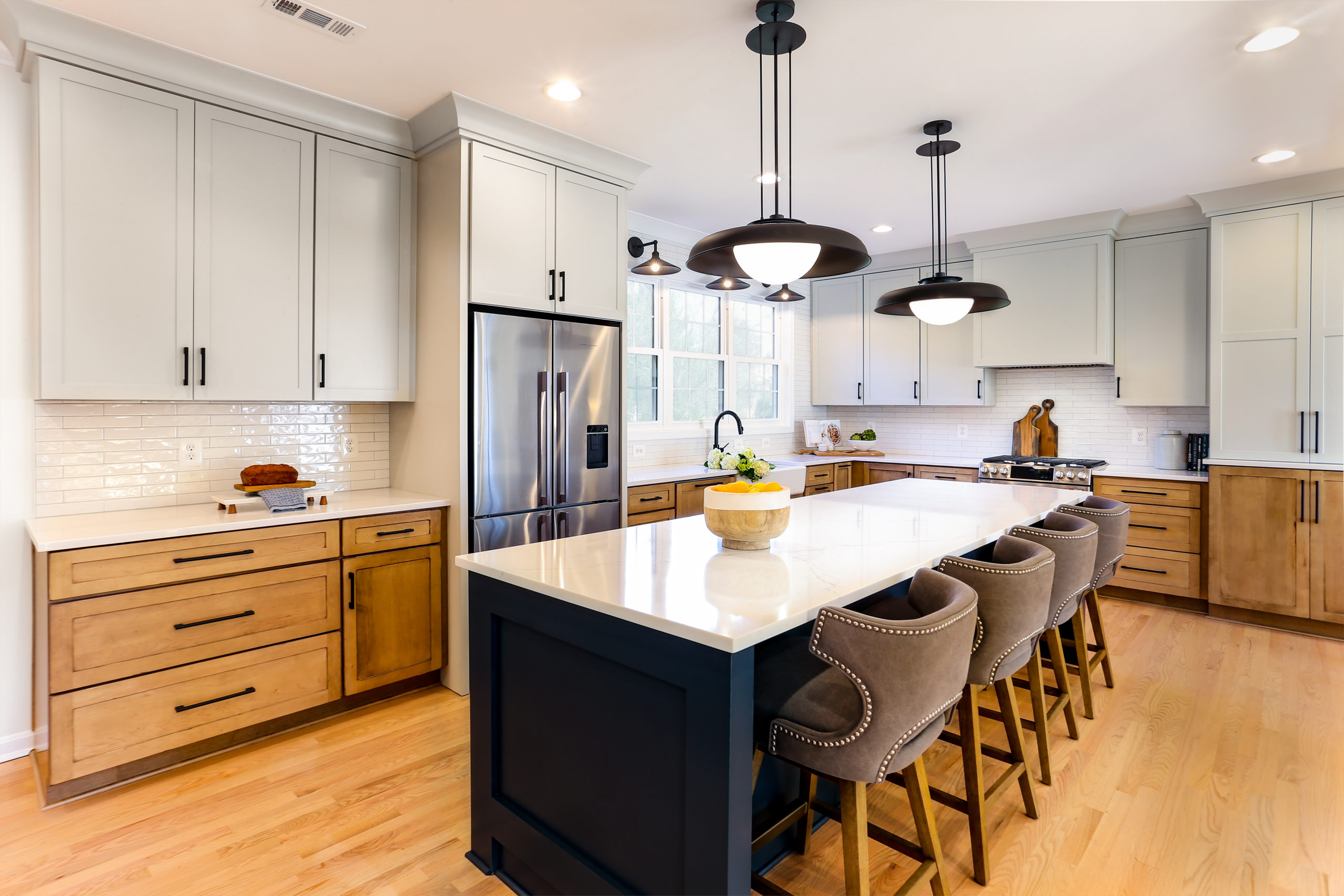
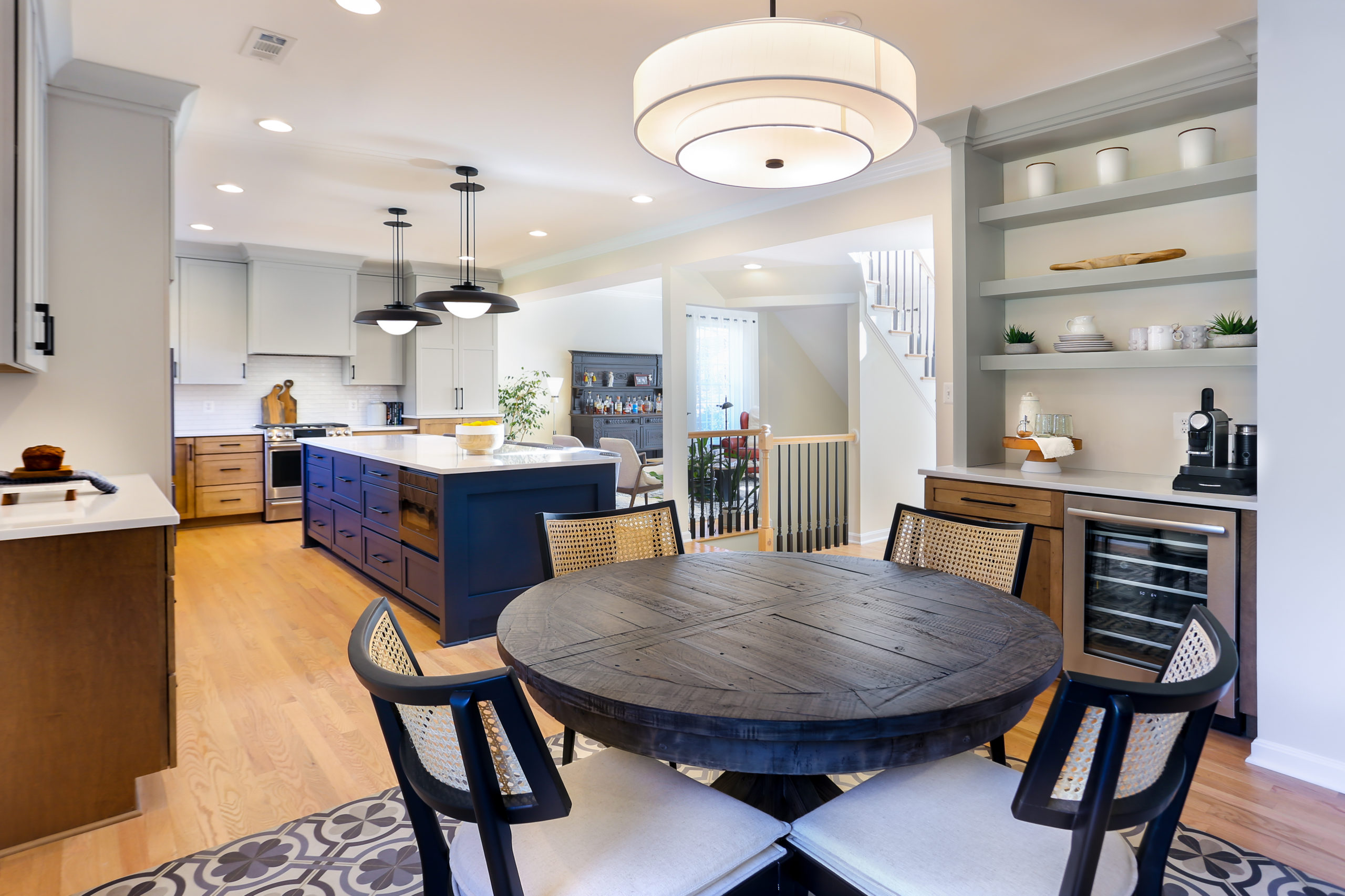
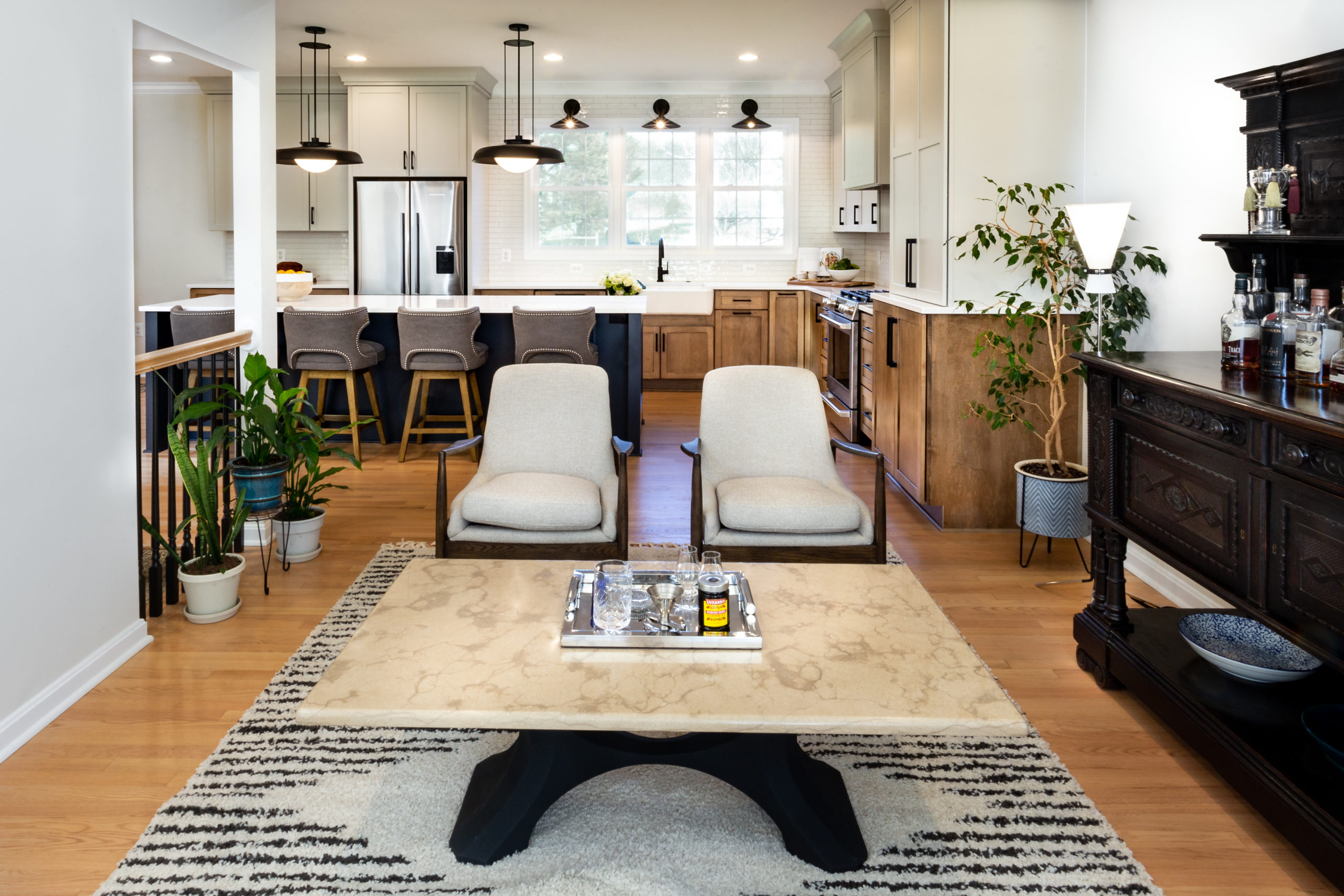
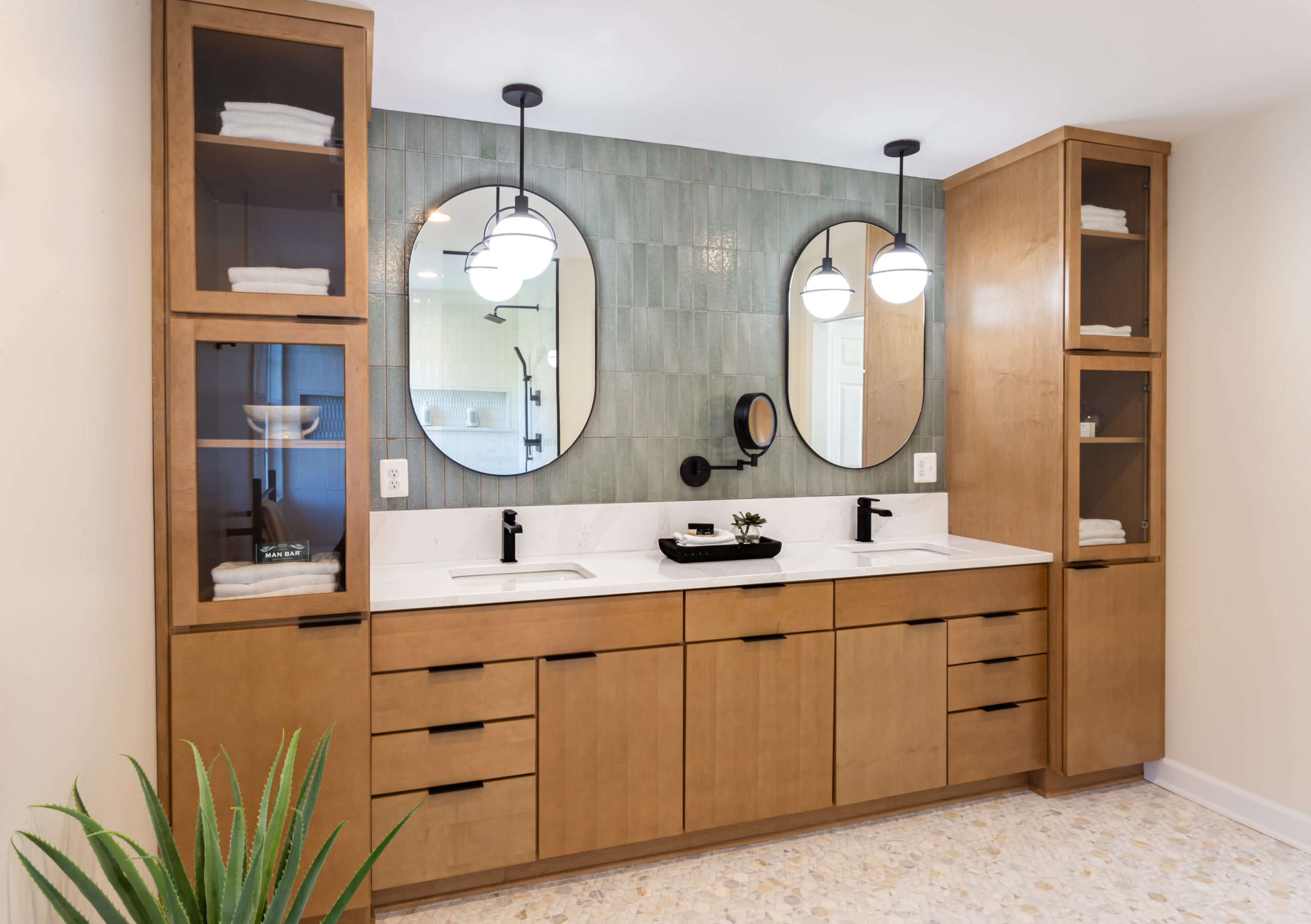
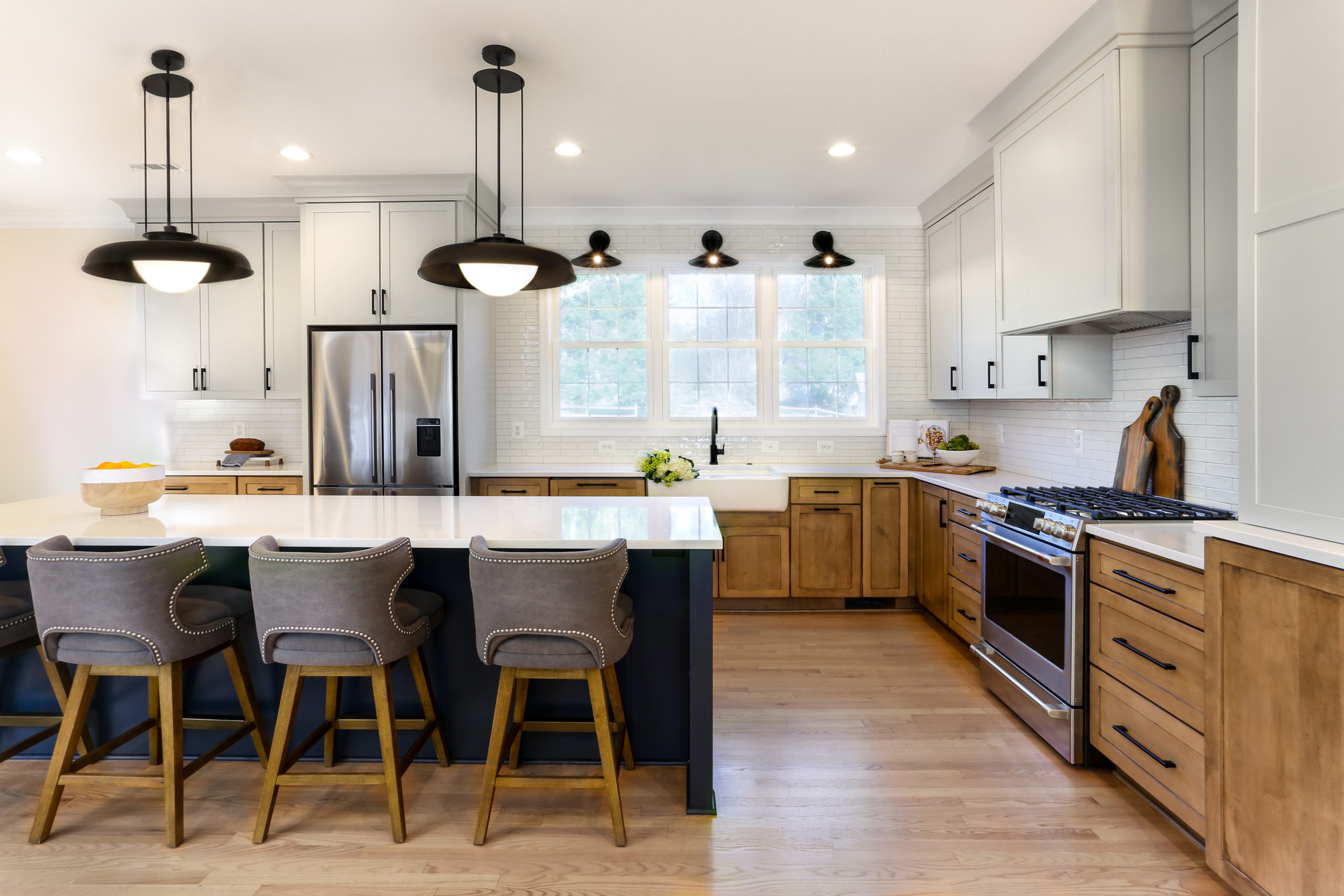
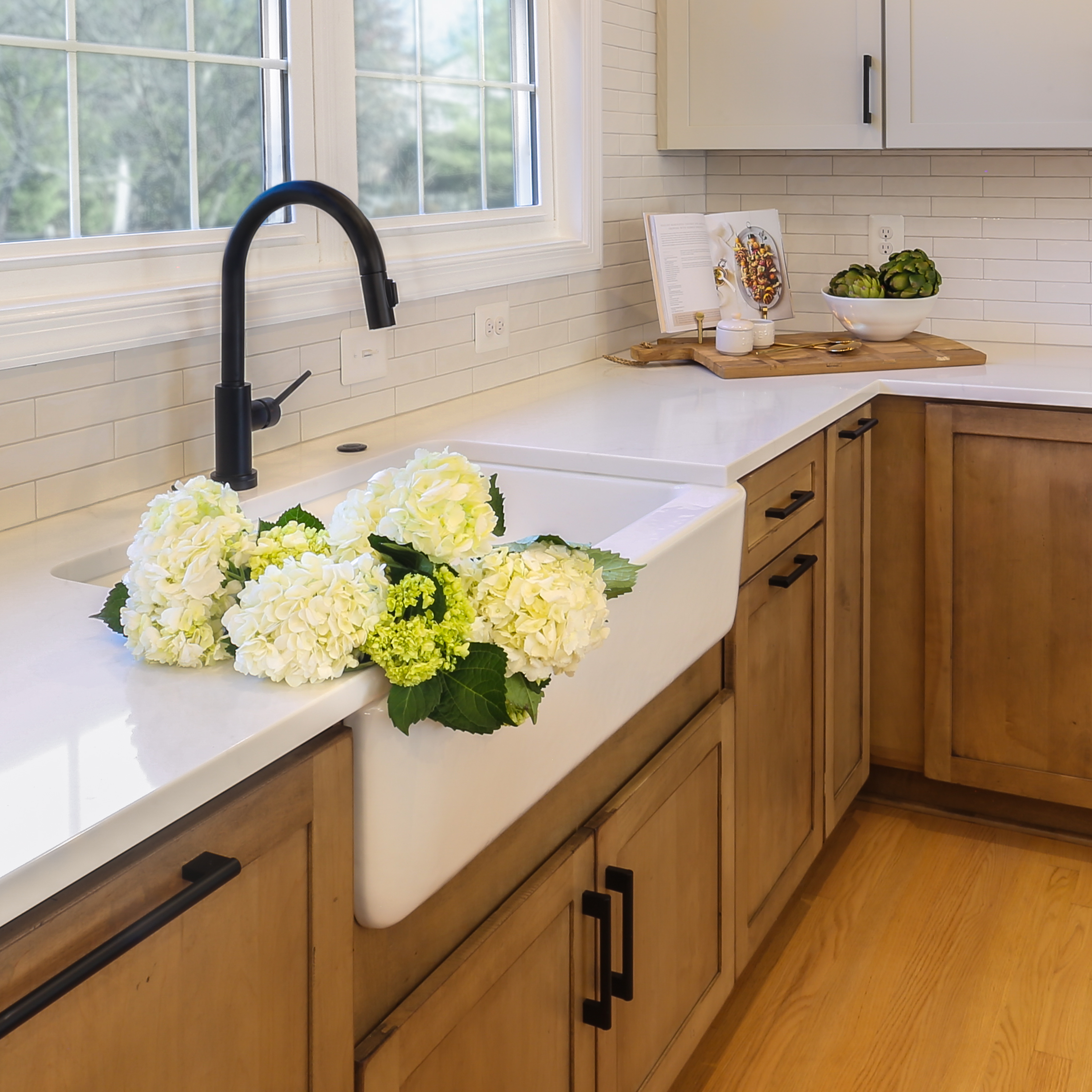
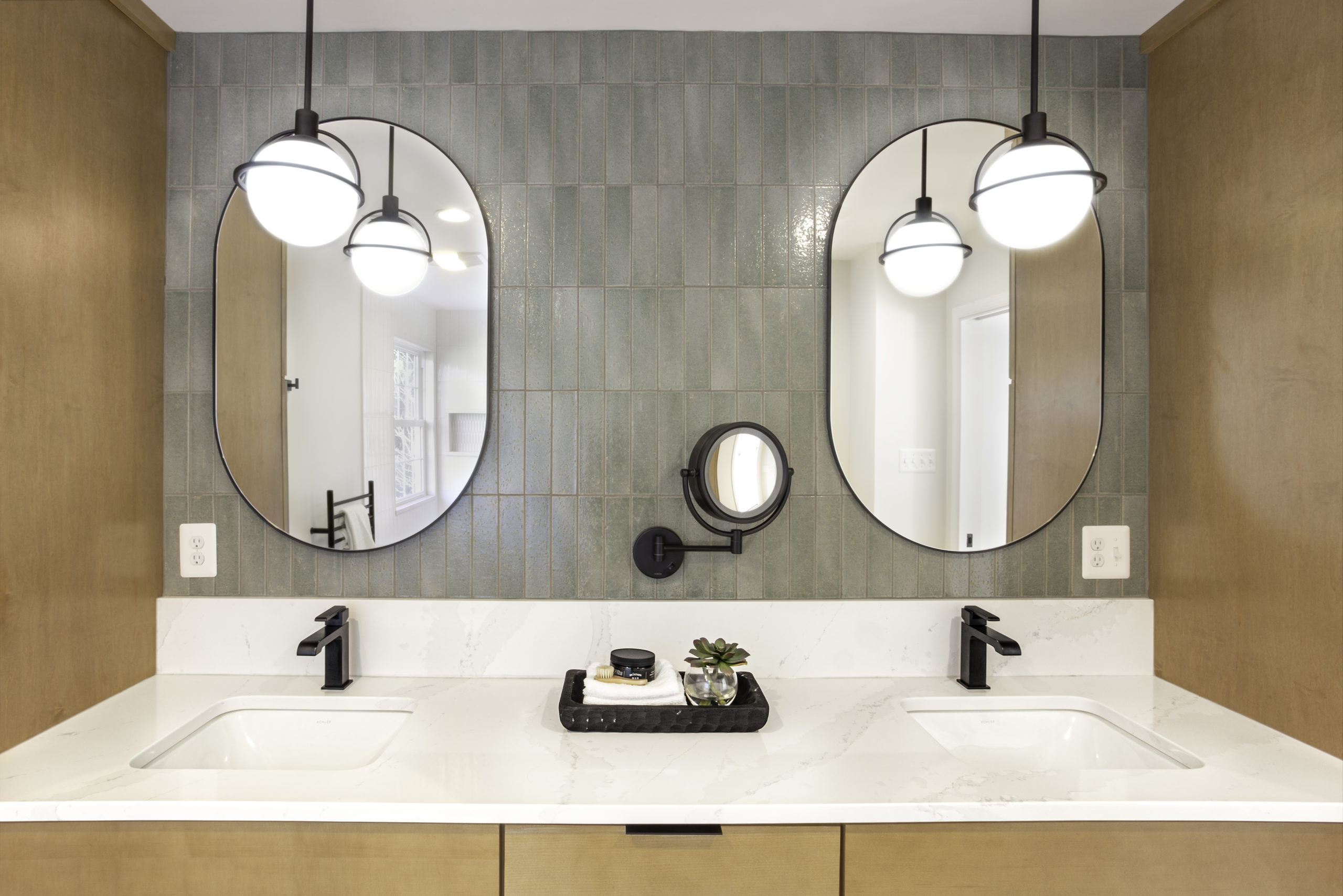
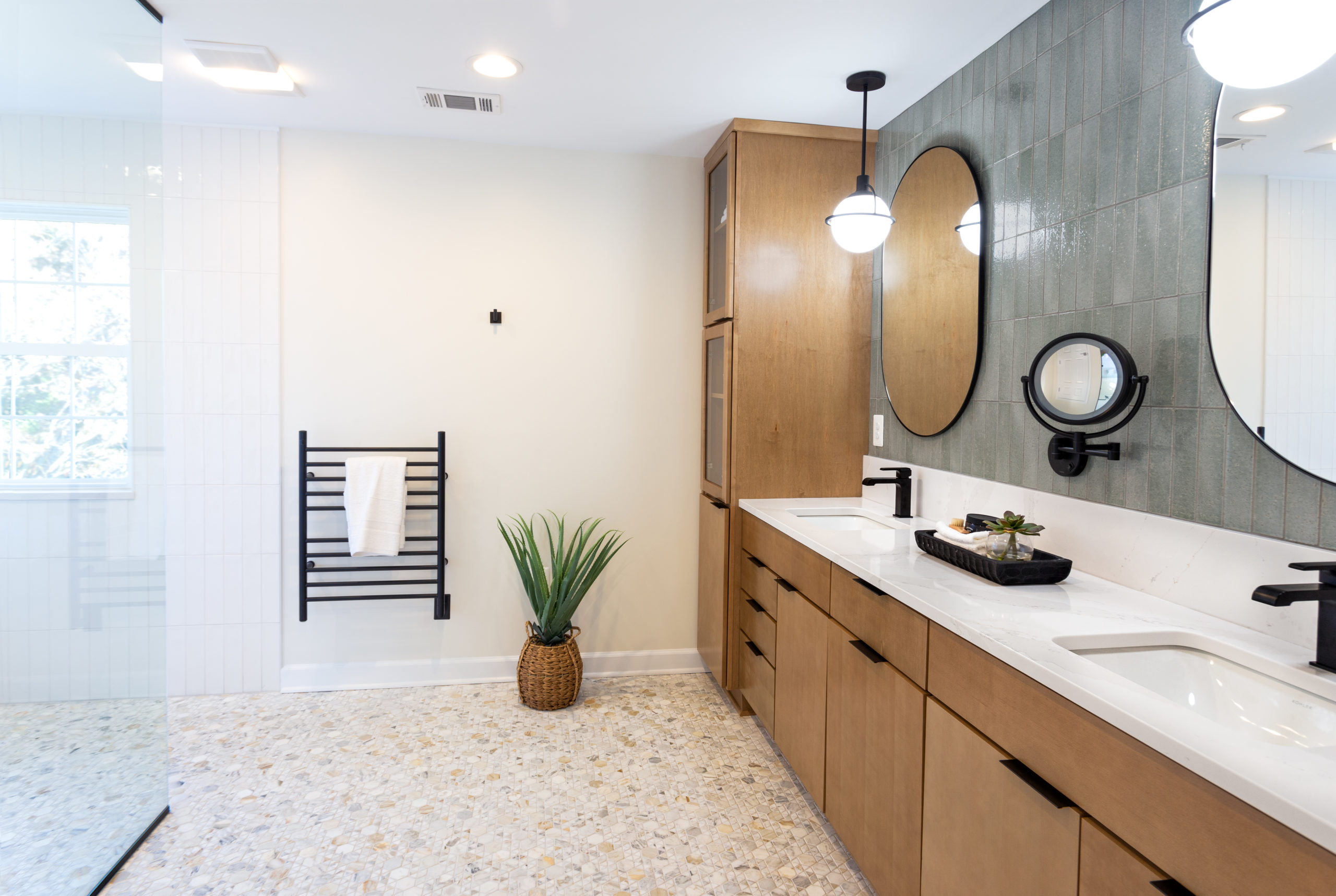
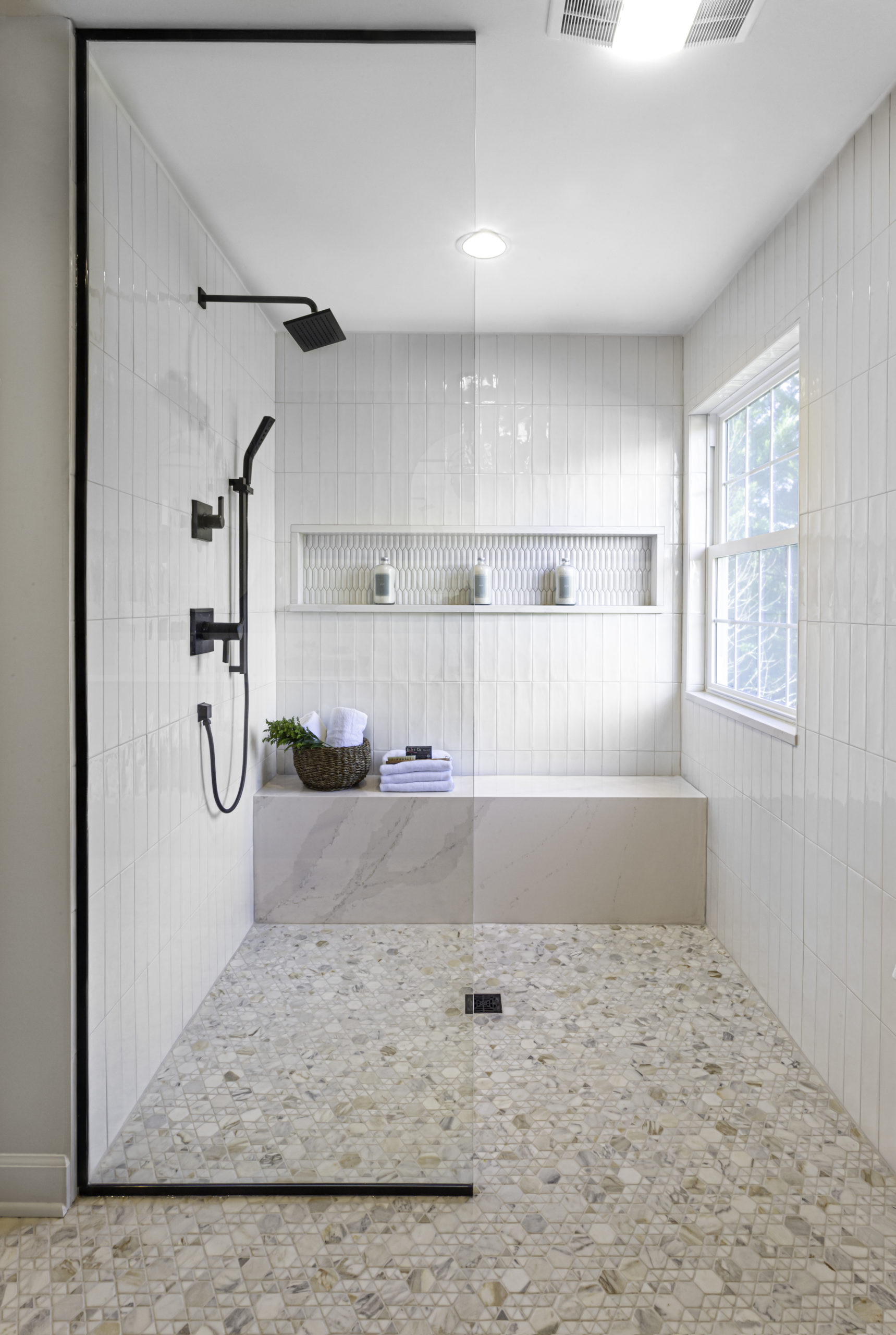
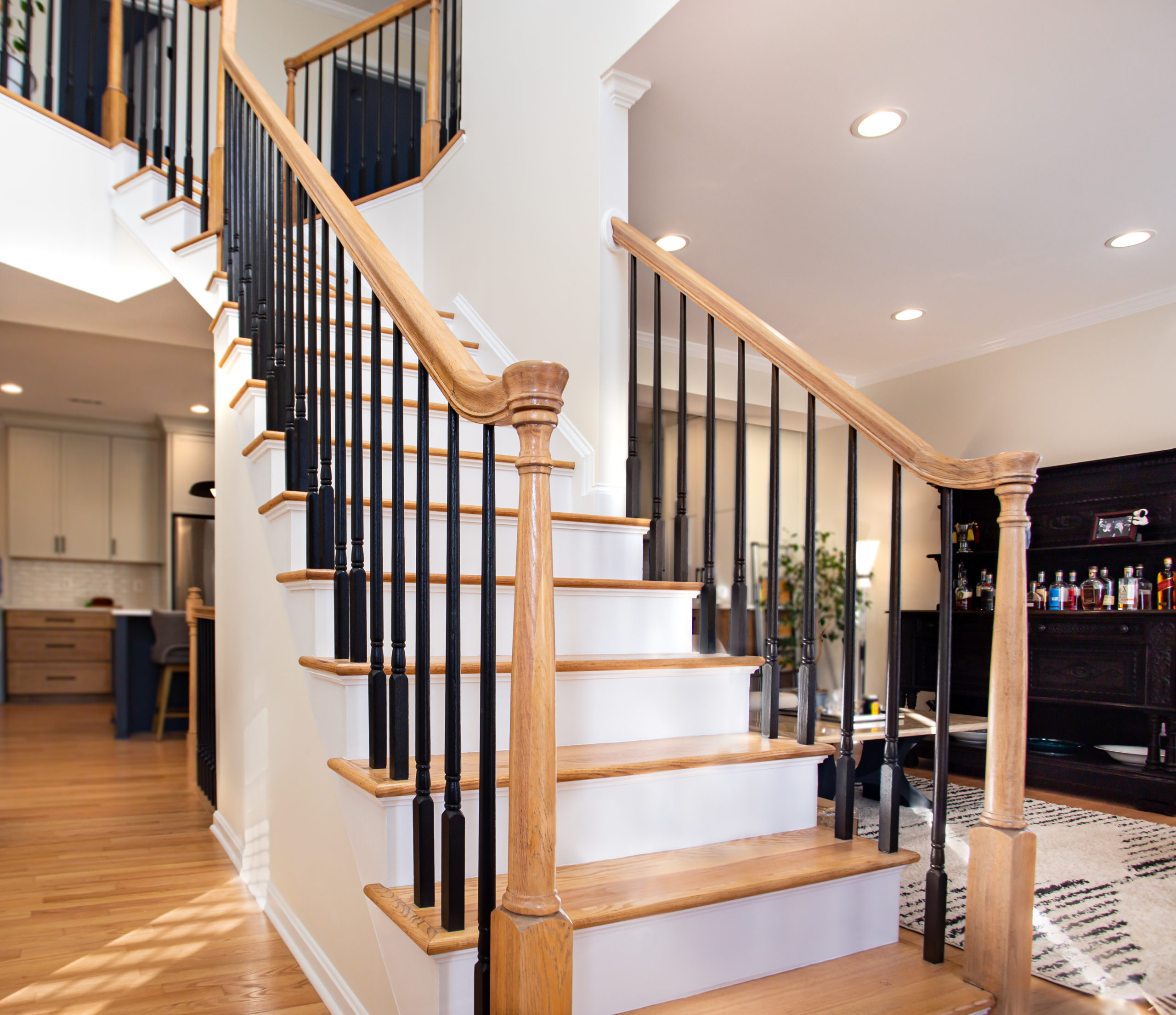
We are an interior design firm in Frederick, MD, with our studio at 31 East Patrick Street downtown. The photographs on this page are from our Frederick Residence, a kitchen and primary bath renovation in the city, and they are a fair picture of what this work produces: a navy island against pale oak, one stone carried through, black fixtures used consistently rather than incidentally, and a lighting plan that works after dark.
A first conversation is genuinely a conversation. We will look at what you have, ask what you are trying to fix, and tell you plainly if we think the project does not need us. When it does, a residential interior design engagement can run from a single room to full-service management of the whole job, including the trades.
More completed work is in our residential portfolio, and three neighborhood pieces go deeper on the situations described above: designing around original character downtown, color and lighting in a Spring Ridge house, and furnishing a new build in Urbana. We are a member firm of the American Society of Interior Designers.
Project Showcase
The Frederick Residence
A kitchen and primary bath renovation · Frederick, Maryland

Visit the Studio
Christopher Zoltan Designs · Frederick, MD
Our studio is in historic downtown Frederick. If you are weighing a renovation and are not sure whether you need us, that is a good reason to call rather than a reason not to.
Christopher Zoltan Designs · Frederick, Maryland
Decide once. Build once.
Bring us the plans, the quotes, and the decision you keep going back and forth on. We will tell you plainly what we would do.
Start a Conversation