
Urbana · Frederick County, Maryland · New Construction
Urbana's New Builds Are Beautiful Blank Slates — Here's How to Make Yours Feel Like Home
A new house in Urbana arrives with no problems. That is exactly the problem.
Southern Frederick County has been building steadily since the Villages of Urbana broke ground in the late nineties, and the result is one of the most consistently well-made housing stocks in the state. Sound framing. Big windows. Ceilings that go up rather than across. Kitchens that would have been considered luxurious a generation ago and are now simply the standard. If you have just closed on one — in the Villages, in Urbana Highlands, or on one of the newer streets still going up off Urbana Pike — you own a genuinely excellent house.
You also own a house with no history in it. No crooked doorway that has to be worked around. No fireplace that dictates where the sofa goes. No previous owner's questionable choices to react against. Every wall is the same shade of builder greige, every room is the same rectangle of possibility, and there is nothing whatsoever pushing back.
Most people find this exhilarating for about three weeks and then quietly stressful for about three years. A blank slate does not tell you what to do with it. That is what makes it blank — and it is why so many beautiful new Urbana homes end up furnished in the two-sofas-and-a-television arrangement that came over from the last house.
The Model Home Is Not a Design Plan
Almost every new-build owner we meet in Urbana has the same reference point: the model they walked through on the way to signing. It looked wonderful. It felt finished. It is also, in the most literal sense, a sales tool — furnished at a scale calibrated to make rooms photograph large, in a palette chosen to offend nobody, by someone who never had to live there in February.
Model homes are staged to be liked quickly. Real homes have to be lived in slowly. Those are different briefs, and they produce different furniture, different lighting, and very different amounts of storage. The clean, sparse, faintly hotel-like quality that reads as sophisticated in a model reads as unfinished once actual life — coats, homework, a dog, a Costco run — moves in.
What a new build is really missing is not furniture. It is layers: the accumulation of texture, contrast, and imperfection that older houses came by honestly through age. In a new house, those have to be designed in on purpose.
Five Ways to Give a New Urbana House a Past
These are the moves we reach for first in new construction — the ones that add depth without fighting the architecture you paid for.
Add Architecture the Builder Didn't
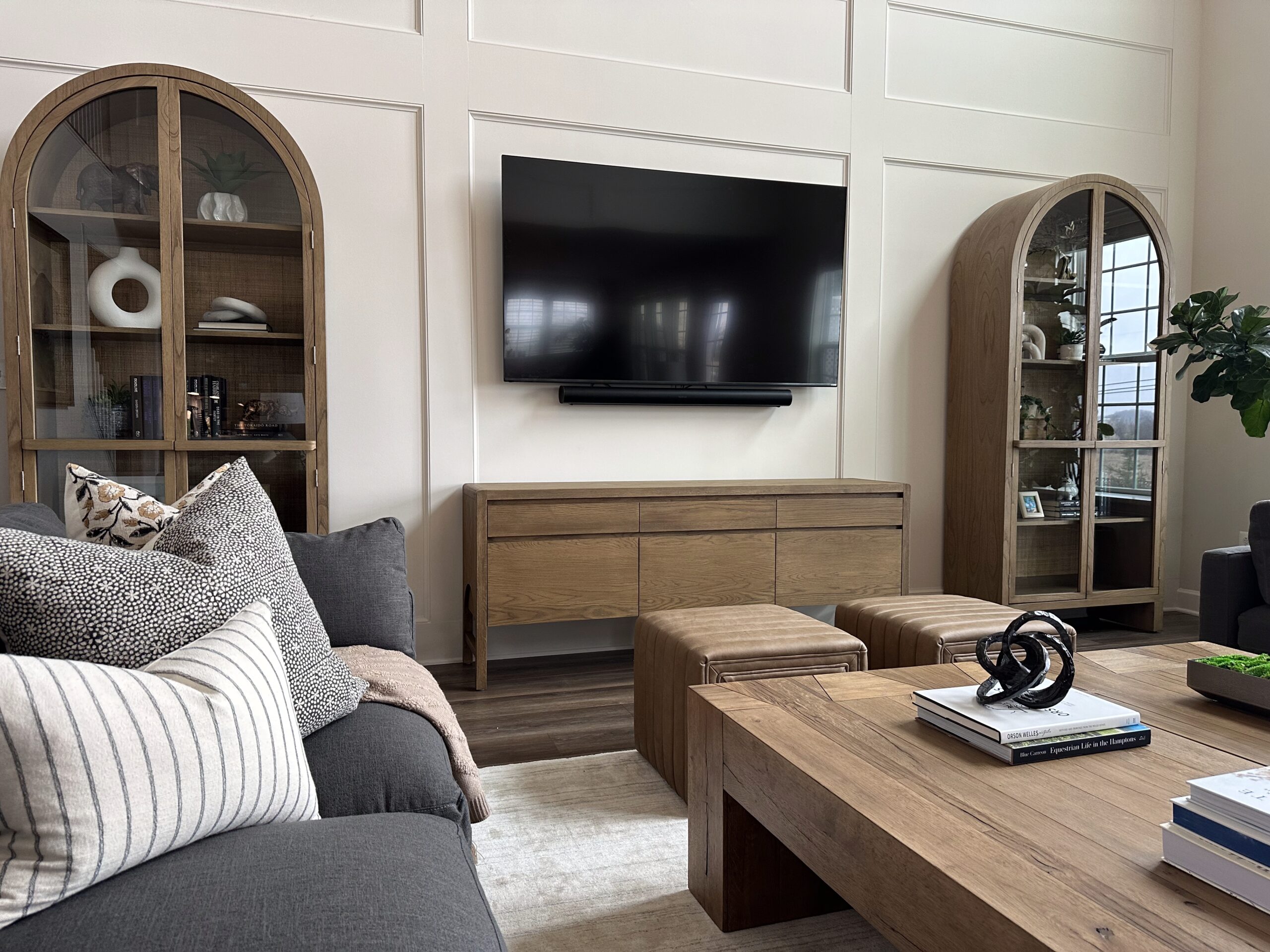
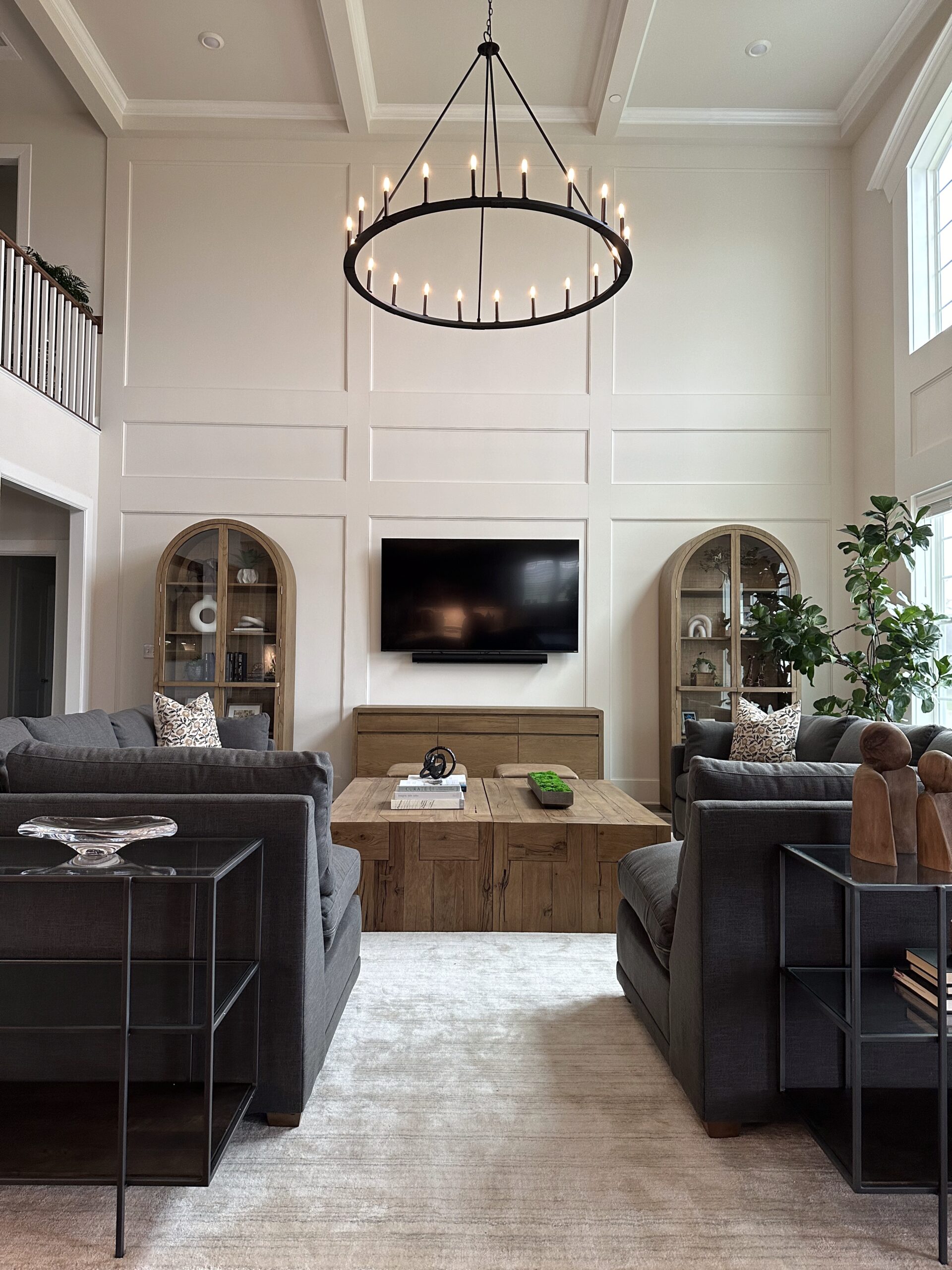
Board-and-batten, applied moulding, a paneled accent wall, a beam across a two-story great room, a properly built-in cabinet run flanking the fireplace. These are the cheapest character you will ever buy, and they are the single fastest way to make a house stop reading as new. In a room with tall ceilings and long blank walls — the signature condition of an Urbana great room — millwork does in a weekend what furniture cannot do at all.
Break Up the Builder Palette
New homes arrive in one continuous neutral, floor to ceiling, room to room. It is a sensible default for a builder and a design dead end for an owner. Introducing value contrast — a deep colour on a study, a warmer white on the trim, a ceiling that isn't the same shade as the walls — gives the eye somewhere to rest and makes the neutral rooms look intentional rather than untouched.
Buy Scale Before You Buy More
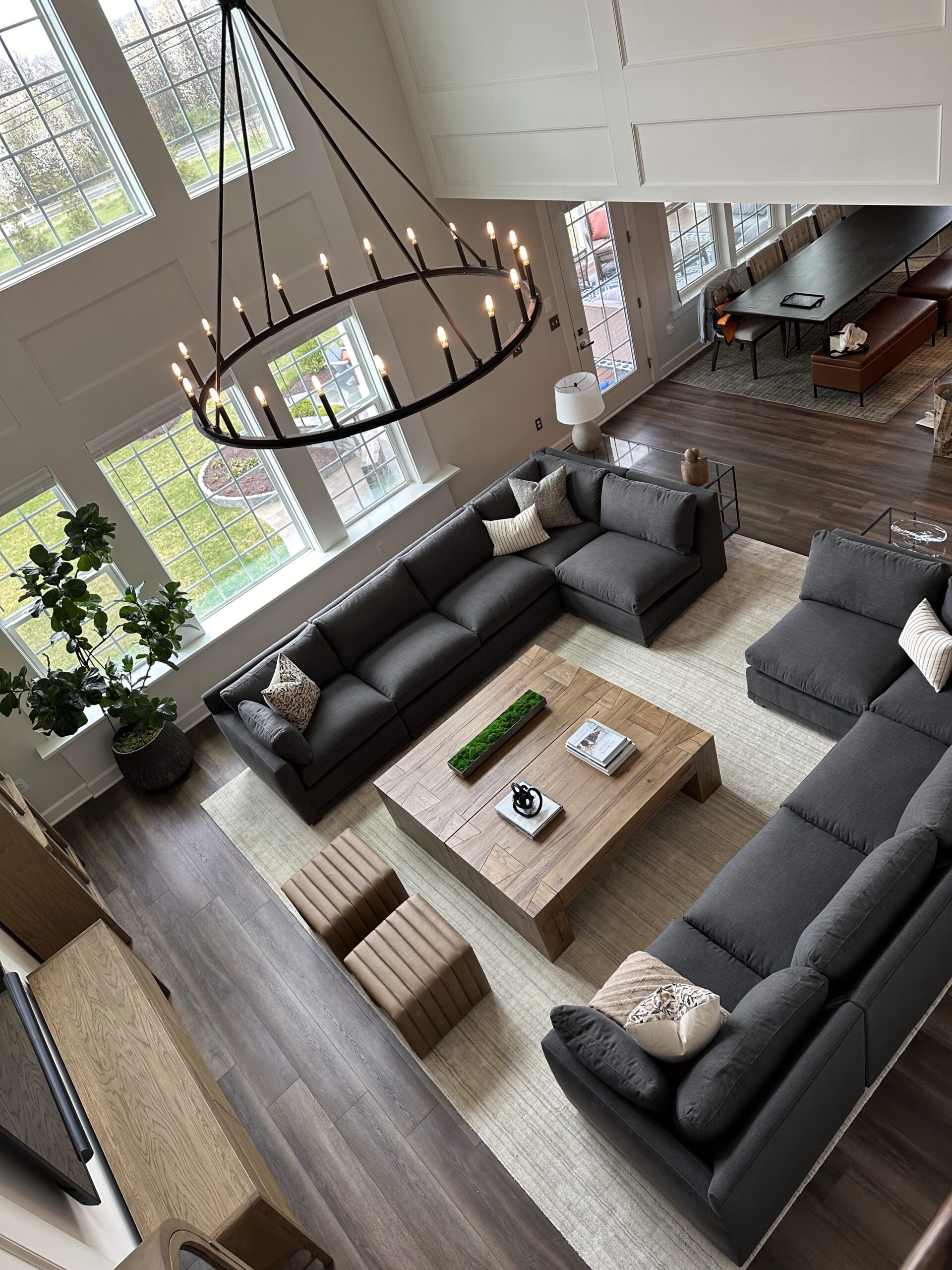
The most common furnishing error in a new build is quantity substituting for size. Two-story rooms and open sightlines swallow normal furniture whole, so people keep adding pieces to fill the space and it keeps feeling empty. One properly scaled sofa, one oversized rug, one large piece of art, and one light fixture with real presence will settle a great room that a dozen smaller purchases never will.
Replace the Builder Lighting First
Nothing dates a new house faster than the fixture package, and nothing changes it faster either. Recessed cans on a single switch give you one flat setting: on. Layering in pendants, sconces, table lamps, and separate circuits turns the same room into a different place at 8 a.m. and 8 p.m. If you make exactly one change to a new Urbana home, make it the lighting.
Put Something Old in Every Room
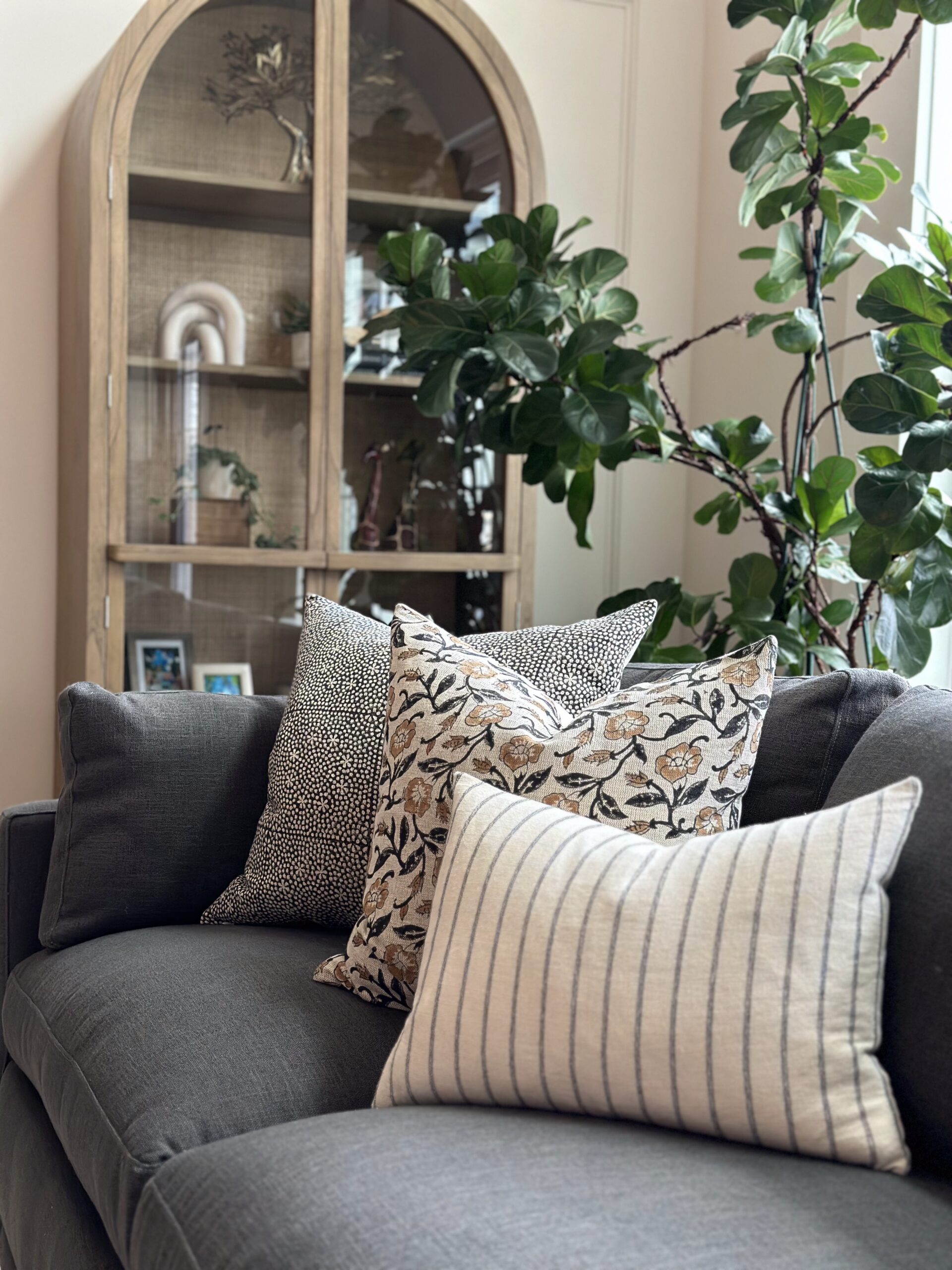
An antique chest, a vintage rug, an inherited mirror, a piece of art with some age to it. One object per room that predates the house is enough to break the showroom effect, and it is what stops a brand-new interior from looking like it was bought in a single afternoon. This is the layer that cannot be rushed — and the one people are gladdest they waited for.
The Best Time to Call Is Before the Drywall
If your Urbana home is still in the build process, you are in the most valuable window there is. Structured wiring for lighting, blocking for a future built-in, an extra circuit, moving a fixture eighteen inches so a table will actually center under it, upgrading the trim package in the two rooms that matter and leaving the rest — all of it is trivial before drywall and expensive after.
We work with plenty of clients who bought the base package deliberately, saved the upgrade budget, and put it into design decisions with a longer shelf life than a builder's granite tier. That is usually the better trade. A builder's option list is priced for volume, not for your house; a designer's plan is the reverse.
And if you have already moved in and lived through a winter — that is a perfectly good starting point too. By then you know which room you actually sit in, where the light is disappointing, and what the house does not have. That is a better brief than any floor plan.
Working With Christopher Zoltan Designs in Urbana
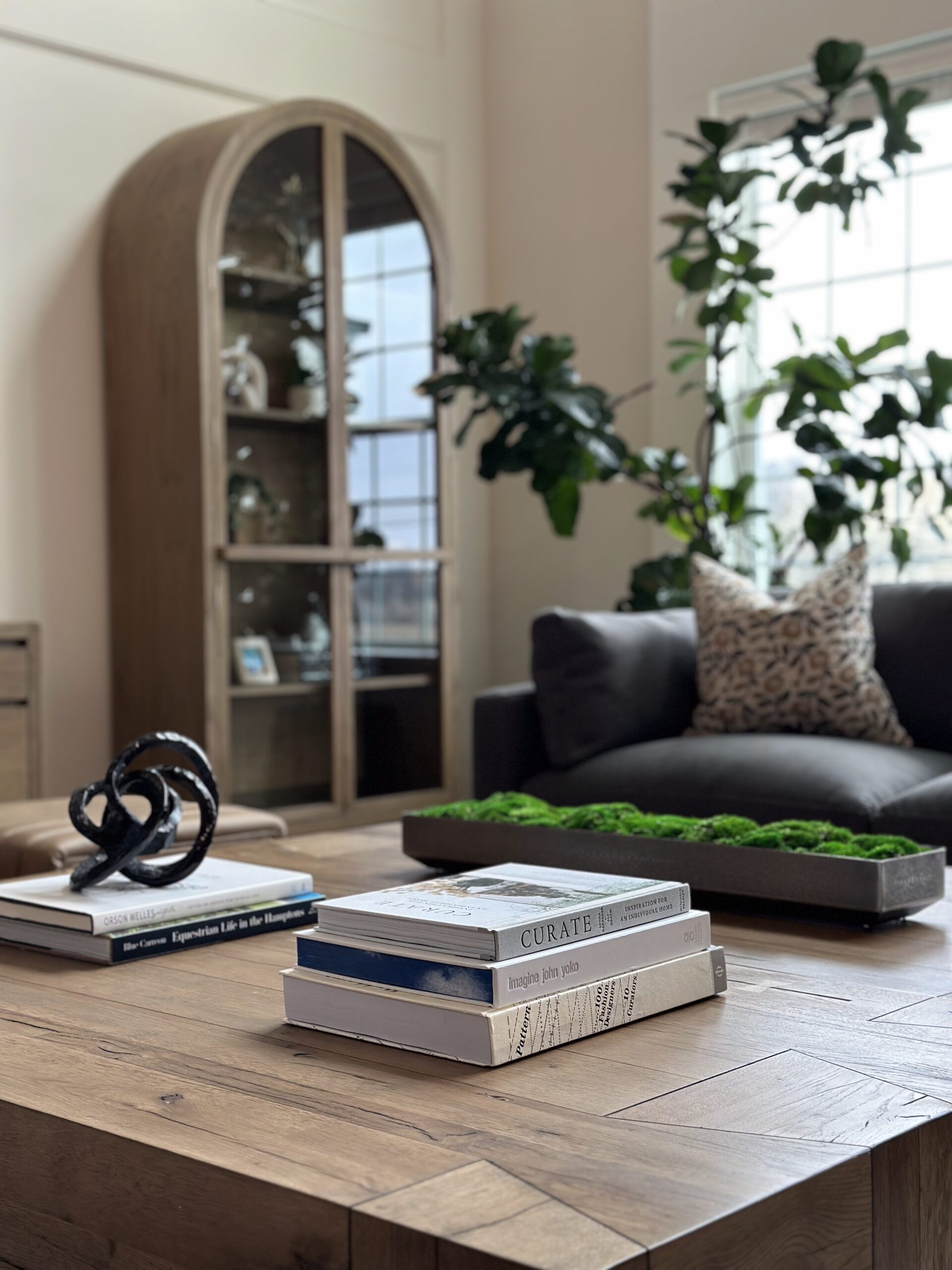
Our studio is at 31 East Patrick Street in downtown Frederick, about fifteen minutes up I-270 from Urbana. Our New Market Residence project — a few miles east, and the source of the photographs on this page — is a good illustration of where this goes: a newer house given board-and-batten walls, arched built-ins, a fixture with actual weight to it, and furniture scaled to a two-story room instead of scaled to a catalogue.
An Urbana engagement usually starts with a walk-through and an honest conversation about how you live. From there it can run as far as you want it to: space planning and furniture layout, paint and finish selection, millwork and lighting design, window treatments, art and accessories, and management of the trades who install it. Or it can stay tightly scoped to the great room, which is where most people feel the problem first.
You can browse more of this work in our residential portfolio, read about our residential interior design process, or see our Urbana service area page. We're a member firm of the American Society of Interior Designers, and we've spent thirty-odd years learning that the hardest houses to design are the ones with nothing wrong with them.
Project Showcase
The New Market Residence
A newer home given depth, scale, and character — Frederick County, Maryland
Visit the Studio
Christopher Zoltan Designs · Frederick, MD
Our studio is in historic downtown Frederick, a short run up I-270 from Urbana. Whether your house is framed, drywalled, or three years lived-in, there is a useful conversation to be had in the room.
Christopher Zoltan Designs · Frederick, Maryland
A new house. An old soul.
Urbana builds them beautifully. We'll help yours stop looking brand new and start looking like yours.
Start a Conversation